
Our History
Shahbaaz began, as all enduring things do, modestly. In June 1983, a single classroom in the Gunj area of Gulbarga opened its doors to a handful of neighbourhood children whose parents dared to believe that quality English-medium education need not be the exclusive preserve of the privileged. The school asked nothing of its students but their presence and their effort. In return, it offered something quietly revolutionary: the world, made accessible.
From the outset, Shahbaaz welcomed children of every faith, caste, and background without distinction. No child was turned away on account of who they were or where they came from. It was a principle so deeply held that it required no policy, no proclamation. It was simply the way things were done.
Word spread the way it does in close-knit communities: not through advertisement or fanfare, but through the conduct of the children themselves. Their articulation, their manners, their honesty were Shahbaaz’s sole ambassadors in a pre-liberalised India, and they proved more persuasive than any notice board or newspaper column. Demand grew swiftly, a second building was added, and a small playground acquired right beside the school building for sports and assembly.
Even as the school found its footing in those early years, we were looking ahead, envisioning a dedicated campus of a scale commensurate with what Shahbaaz was destined to become. In 1988, land was acquired at what would become the school’s current address. The foundations of the new building were laid in 1992. Meanwhile, the school continued to grow far beyond the capacity of its original premises, running in two shifts to accommodate the demand: the primary school from half past eight until half past twelve, and the secondary school from half past twelve until half past five in the evening.
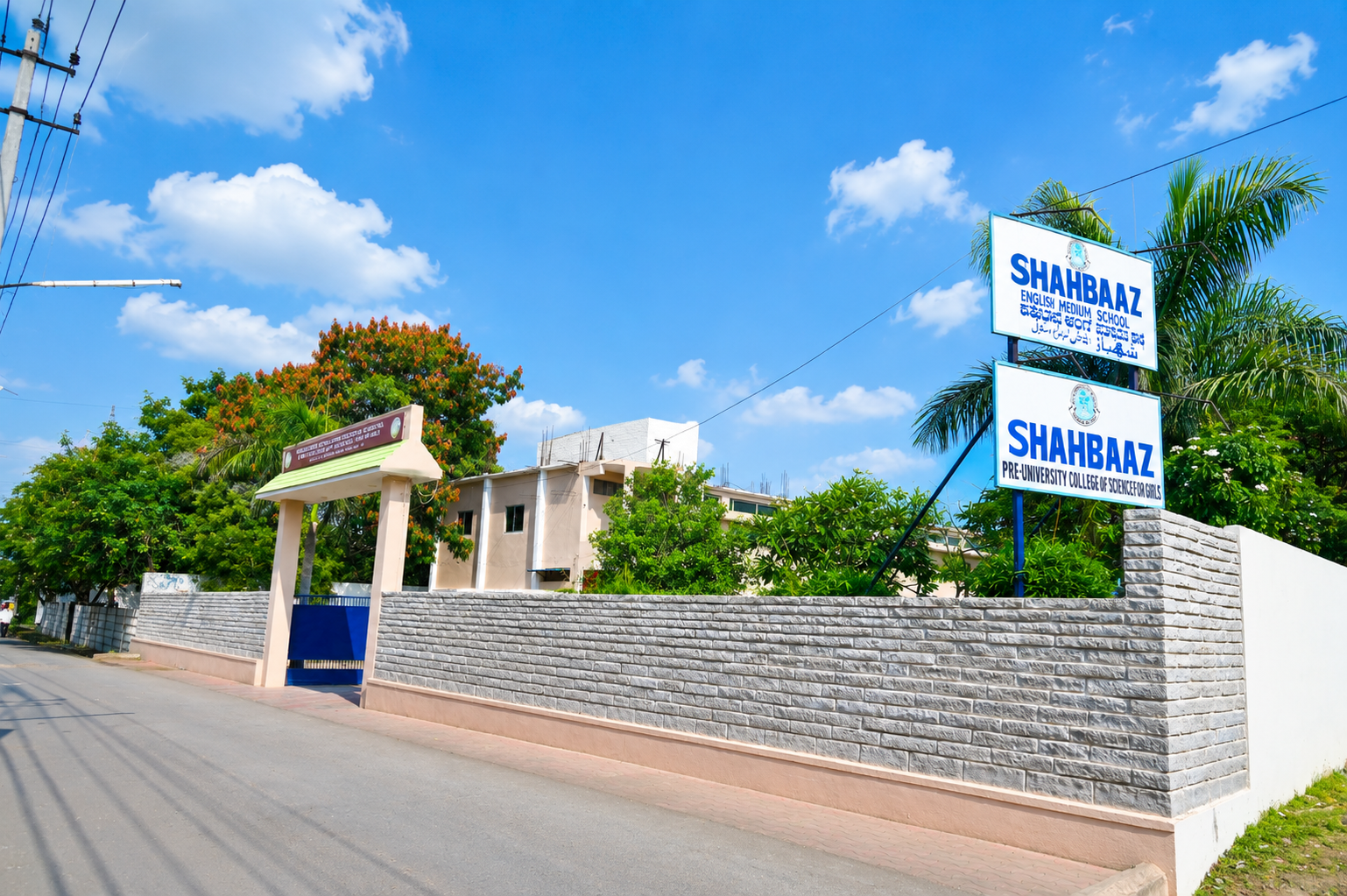
When the new campus was ready to receive its students in 1998, it was clear that something exceptional had been built. The classrooms were spacious and high-ceilinged, generously cross-ventilated and filled with natural light. The staff rooms were equally well-appointed, a recognition that those who teach deserve surroundings worthy of their vocation. The campus offered a 24-hour water facility, clean and cool drinking water, and separate, well-maintained washrooms for boys, girls, and staff alike. Two large grounds provided ample space for sport, assembly, and the kind of open-air life that is so essential to a child’s formation. It was, in every sense, a school built to be lived in.
Before the move, a tree plantation drive was held in which students planted a Gulmohar sapling into freshly dug pits along the perimeter of the new campus. Several of those trees stand to this day, tall and unhurried, as quiet witnesses to the morning when the students of Shahbaaz first learned they were coming home.
The years since have brought successive additions: a first floor, well-appointed laboratories, a library, a dedicated nursery classroom for pre-primary students, smart boards, projectors, a wifi-enabled campus, an intercom system, comprehensive CCTV coverage, a continuous boundary wall, a landscaped garden, vehicle parking, and the grand arch that now welcomes all who enter. Each addition has been deliberate, each one a further expression of the founding conviction that these children deserve nothing less than the best their school can offer.
Our work, however, is not finished. The best is yet to come.